
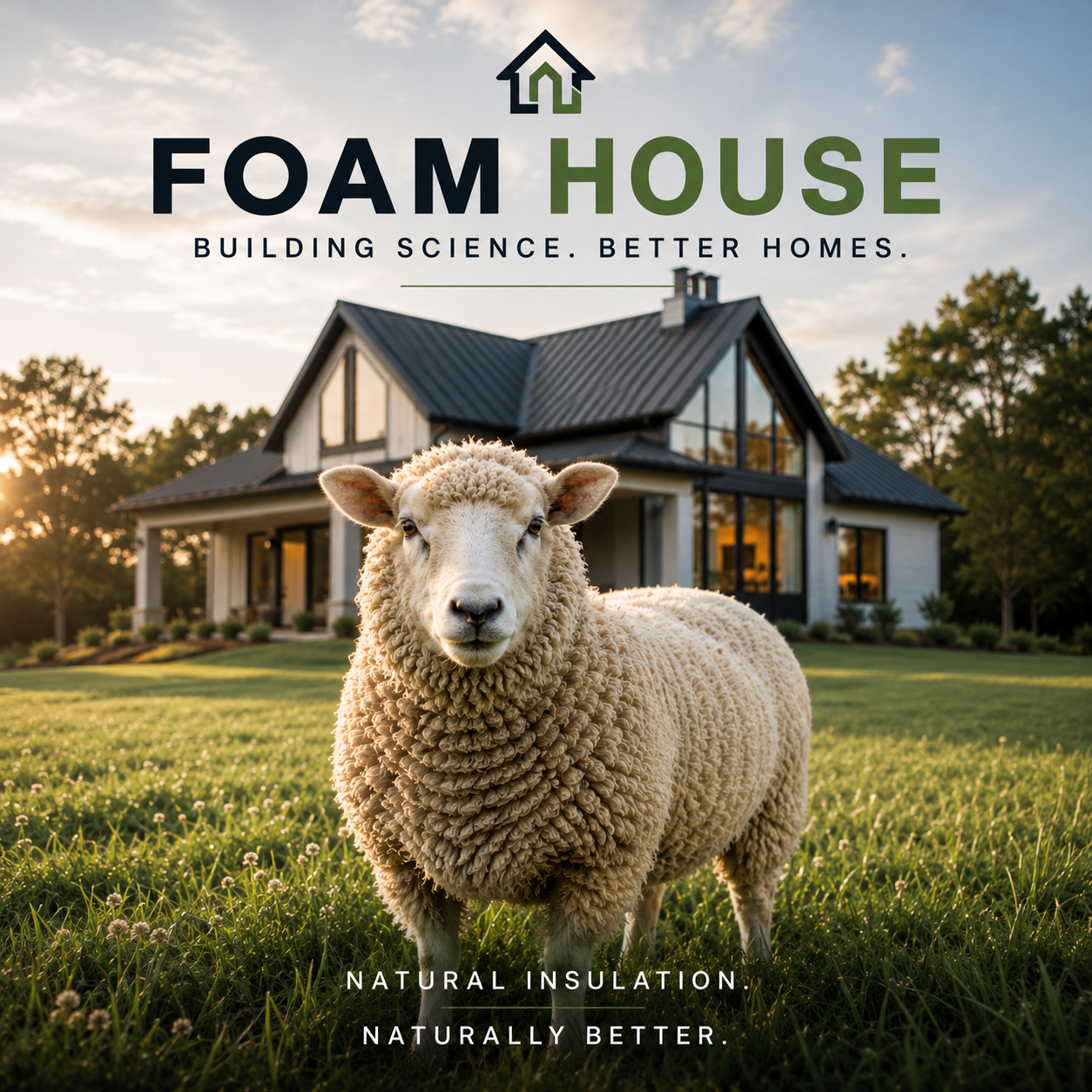
The original insulation
Why Natural Wool Fiber?
One of Nature’s Original Insulation Materials
For thousands of years, sheep have survived some of the world’s harshest climates. Their fleece is a naturally engineered insulation system that helps regulate temperature, manage moisture, and provide year-round comfort.
Today, modern sheep wool insulation brings many of those same natural properties into high-performance homes.
At Foam House, we believe every insulation material has strengths. Natural wool fiber is another tool in our building science toolbox, selected when it is the right solution for the project.
What Is Natural Wool Fiber Insulation?
Natural wool fiber insulation is manufactured from natural sheep fleece that has been cleaned, processed, and formed into insulation batts.
The fibers create millions of tiny air pockets that slow the movement of heat while also helping regulate moisture within the building assembly.
Although it is one of the oldest insulation materials in history, modern processing has made it a practical option for today’s energy-efficient homes.
Why Consider Wool?
Natural Thermal Performance
The crimped fibers naturally trap air, reducing heat transfer and helping maintain comfortable indoor temperatures throughout the year.
Moisture Management
Unlike many insulation materials, natural wool fiber can temporarily absorb and release moisture vapor while continuing to provide insulation.
Proper moisture management helps building assemblies dry more effectively when designed correctly.
Excellent Sound Control
The dense natural fibers absorb airborne sound, making sheep wool an excellent choice for interior walls, bedrooms, offices, and media rooms where quieter spaces are desired.
Renewable Resource
Sheep produce a new fleece every year, making wool a renewable insulation material when responsibly sourced.
Comfortable to Install
Natural wool fiber is soft to handle and does not contain glass fibers, making installation more comfortable for installers.
Where Wool Works Best
Depending on the design of the home, natural wool fiber may be an excellent choice for:
Exterior walls
Cathedral ceilings
Roof assemblies
Interior sound-control walls
Floor systems
Specialty building projects
Every home is different, and the insulation system should match the building’s design and performance goals.
The Foam House Standard
At Foam House, we do not believe there is one “best” insulation.
Spray foam, fiberglass, mineral wool, cellulose, and natural wool fiber each have advantages. The best insulation depends on the building assembly, climate, moisture conditions, budget, and performance objectives.
Our job is not to sell one product.
Our job is to recommend the right insulation system for the right application.
Building science always comes before product selection.
Building Better Homes Through Building Science
Natural wool fiber insulation is another example of how modern construction can benefit from both traditional materials and today’s building science.
Whether we recommend natural wool fiber, spray foam, fiberglass, or a combination of systems, our goal remains the same:
To build homes that are more comfortable, more durable, more energy efficient, and built to perform for generations.
Foam House Building Science
Better insulation begins with better understanding